19 October 2025
Digital Humanities and Open Scholarship Unite at ANU for DHA 2025 and CAPOS 2025
From 2–5 December 2025, the Digital Humanities Australasia (DHA 2025) conference and the Canadian Australian Partnership for Open Scholarship (CAPOS) 2025 came together on the lands of the Ngunnawal and Ngambri peoples at The Australian National University (ANU). This joint event created a vibrant space for dialogue on digital cultural heritage, open scholarship, and the evolving role of technology in research.
DHA 2025: Exploring “Digital Archipelagos”
Under the theme “Digital Archipelagos”, DHA 2025 examined the ethics of collecting, studying, and preserving digital cultural heritage. The program emphasised Indigenous data practices and sustainable approaches to digital humanities, reflecting the intersection of cultural responsibility and technological innovation. The main conference ran from midday Wednesday 3 December to Friday 5 December, andfeatured plenary sessions, panels, and workshops that sparked critical conversations about research integrity and openness.
CAPOS 2025: Re-Defining Open Social Scholarship
Complementing DHA 2025, the CAPOS gathering focused on “Re-Defining Open Social Scholarship in an Age of Generative ‘Intelligence’”. Held on 2–3 December, CAPOS offered featured speakers, partner panels, and paper sessions exploring how generative AI reshapes scholarly communication and collaboration.
Key Themes and Highlights
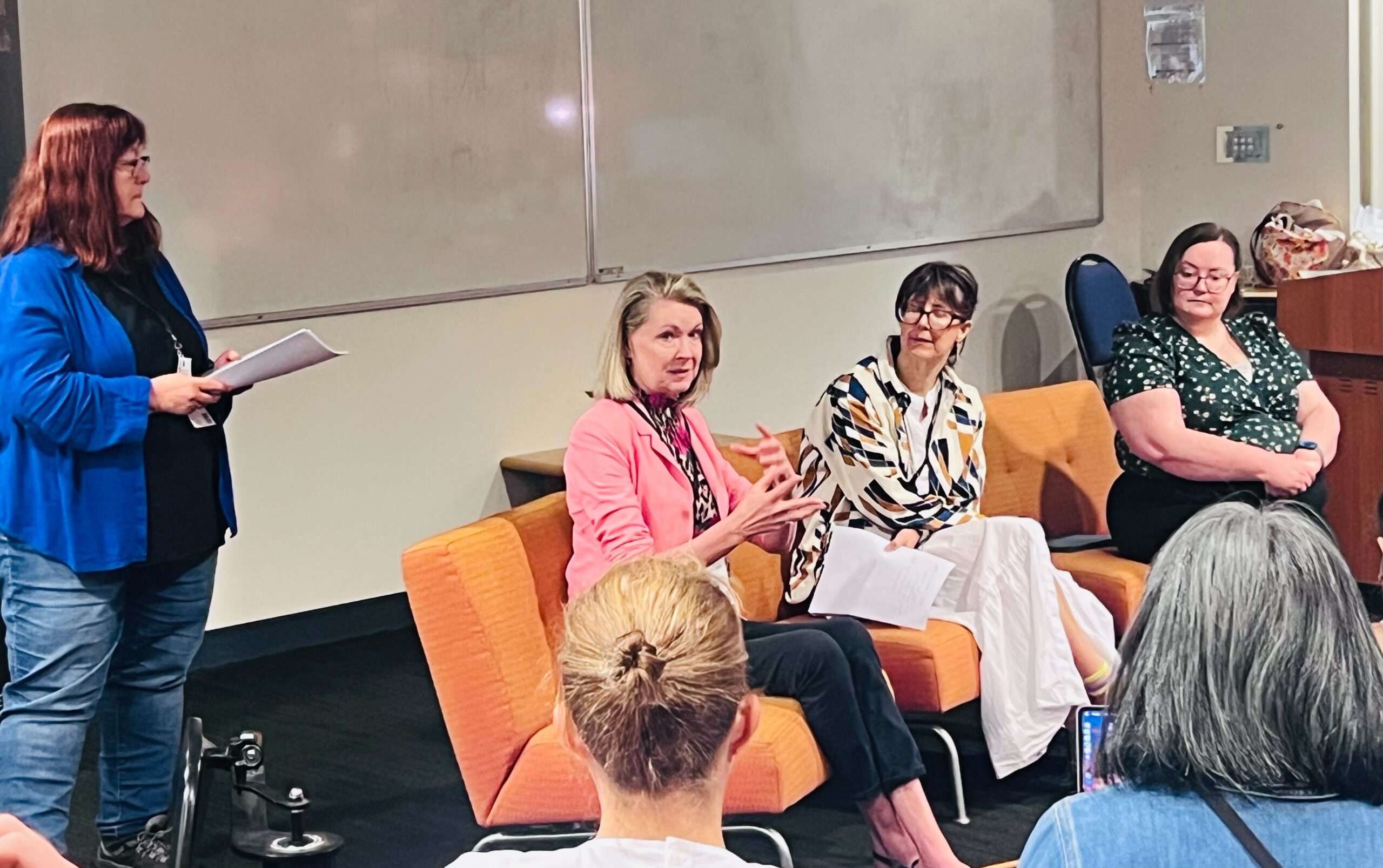
Plenary sessions across both events underscored the importance of FAIR (Findable, Accessible, Interoperable, Reusable) and CARE (Collective Benefit, Authority to Control, Responsibility, Ethics) principles—particularly the Authority to Access element for First Nations data custodians.
Other recurring themes included:
- Building trust with research partners
- Ethical and responsible use of AI
- Transparency about AI’s environmental impact
The discussions reinforced the need for frameworks that respect cultural sovereignty while enabling innovation and the importance of trust and identity.
Spotlight on Trust, Identity, and Persistent Identifiers
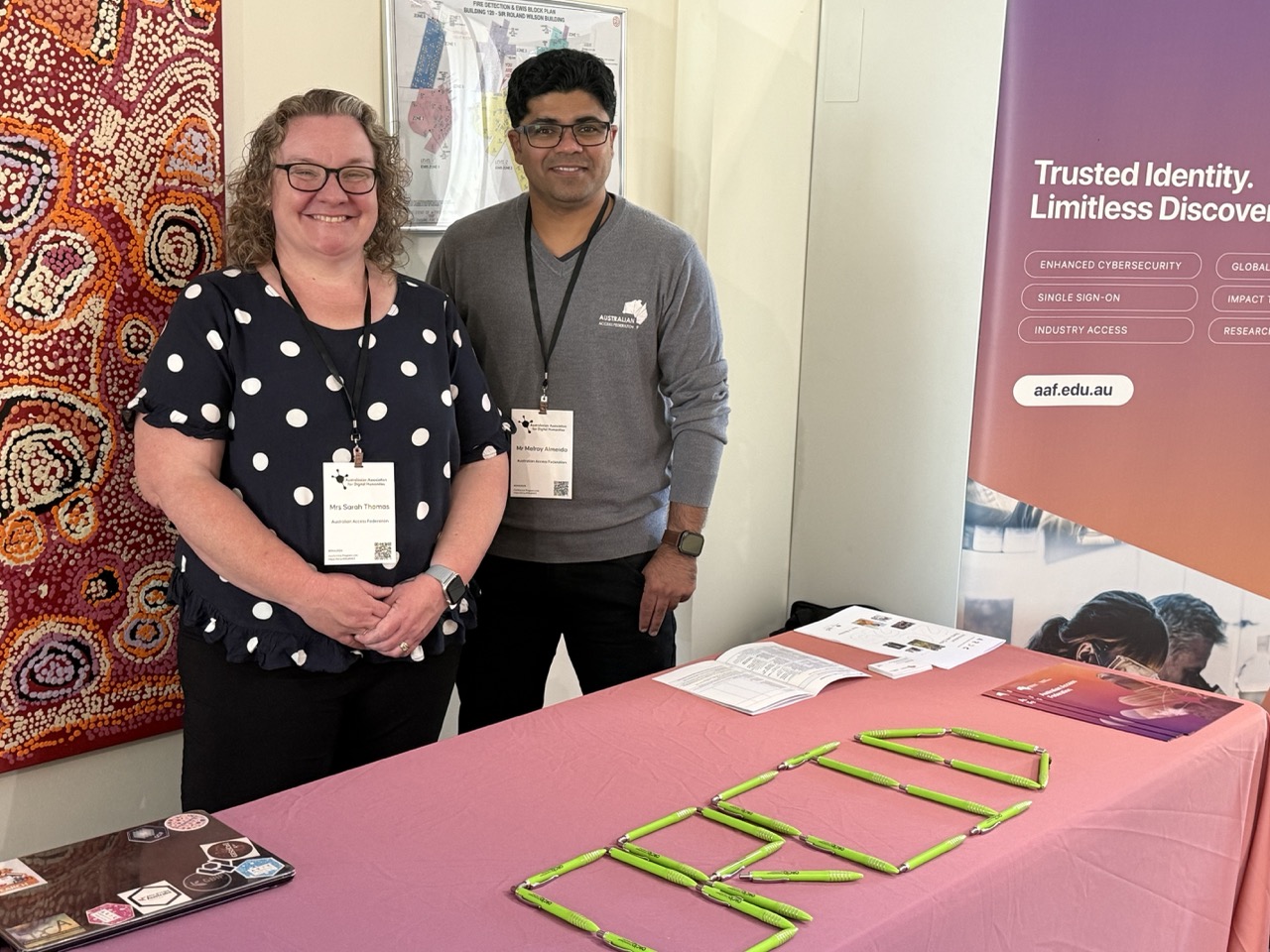
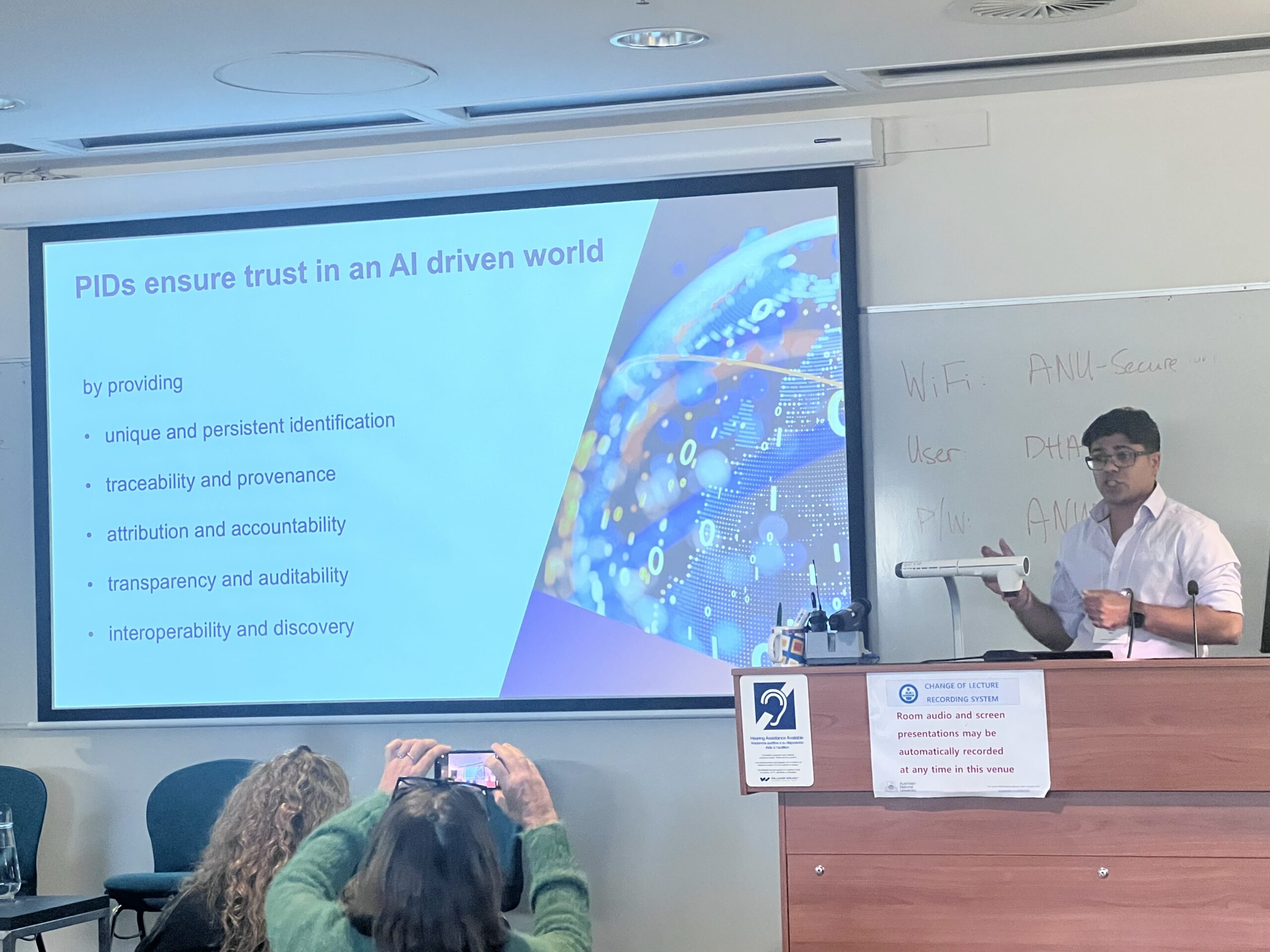
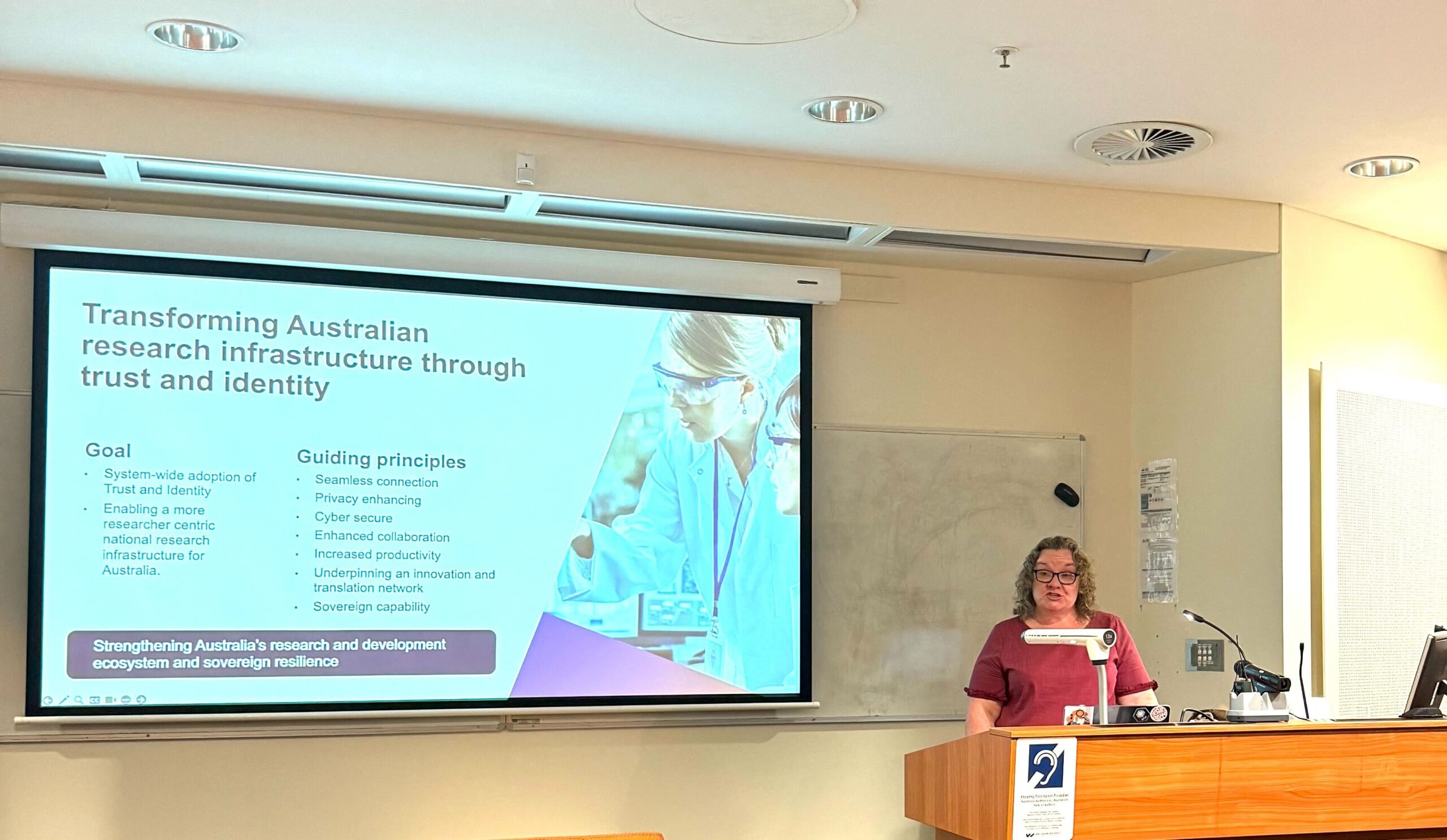
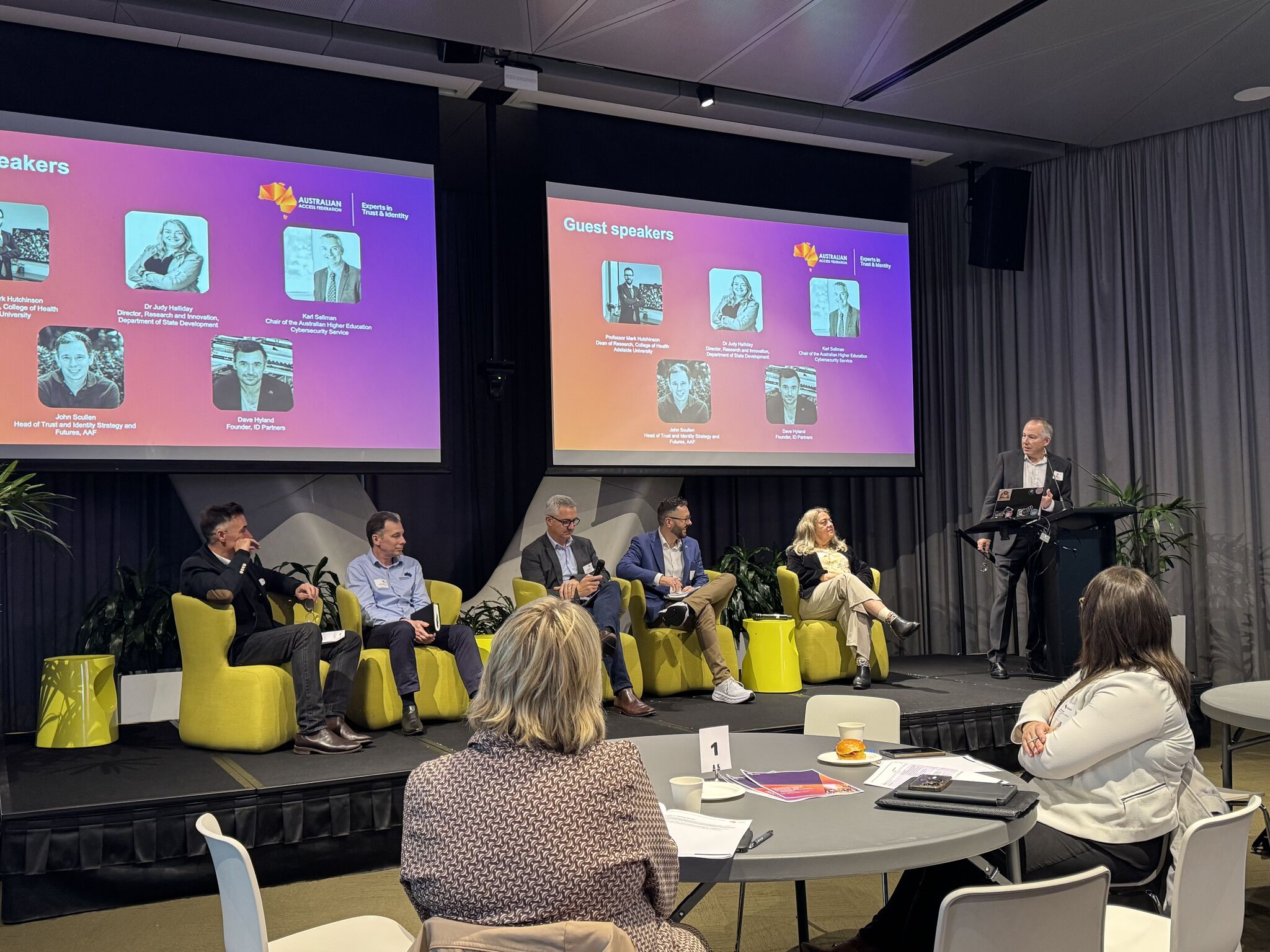
The AAF’s Melroy Almeida, PIDs Community and Engagement Lead, presented Persistent Identifiers at the Heart of Open Scholarship in an Algorithmic AI-Driven World which generated significant interest and dialogue. Along with the AAF’s Deputy CEO Margie Jantti and Portfolio Manager Sarah Thomas whose presentation explored the benefits of Trust and Identity services for the humanities, highlighting their role in fostering collaboration and research integrity.
Margie Jantti, DCEO, says: “DHA highlighted the strong alignment of the AAF’s Trust and Identity services and products in addressing digital humanities research challenges for research integrity, openness and accessibility, disciplinary and cross-disciplinary cooperation and collaboration, and the value of persistent identifiers.
“It was an opportunity to showcase ORCID and PIDs how they address the principles of FAIR and CARE for ethical data reuse and measuring research impact.”